From Strawberries to Stewardship: Carrying a Family Legacy Forward

For Pahoua Lee and her family, farming was never just a job. It was a way to survive, to belong, and to stay connected to home.
After immigrating to the United States in 1979, Pahoua’s parents moved from Utah to Stockton and eventually settled in Fresno, drawn by the possibilities of agriculture. Farming was familiar to them, rooted in the work they had done in Thailand, and it became a way to rebuild a sense of place in a new country. As Pahoua shared, it was deeply therapeutic—something her parents pursued not because it was easy, but because it was what they knew how to do best.
Learning, Risk, and Reinvention
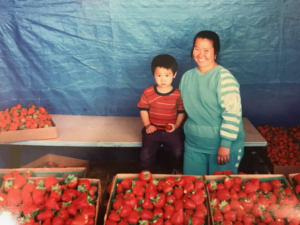
Strawberries were not part of Pahoua’s family farming tradition. In Thailand, they had grown rice, grains, and vegetables. But her father was endlessly curious and saw potential in Fresno’s climate and the strawberry market during the 1990s. He researched the crop, recognized an opportunity, and decided to take a risk.
He saved money to rent land, brought in his parents to share their agricultural knowledge, and committed fully to learning a new crop. Leases were often year-to-year, which meant frequent moves and constant uncertainty, but the family adapted and kept going.
Pahoua’s father was also an artist. He painted their roadside strawberry stand in bright, eye-catching colors, knowing that presentation mattered and that care showed through even in small details. The farm itself was a family operation—eight siblings, aunts, and uncles working together. Early mornings in the fields, weekends spent picking berries to beat the heat, and children earning a small amount per basket were all part of daily life.
Those strawberries paid for everything: books, shoes, jackets, food, and education.
“We never felt poor,” Pahoua recalled. “There was so much richness in our lives.”
Lessons from the Land
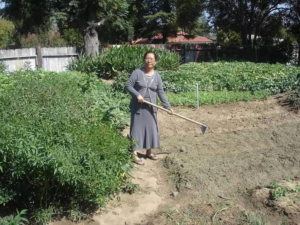 Pahoua’s parents taught her that land is both a gift and a responsibility.
“You have to know your soil and tend to it constantly,” she explained. “Treat your land as well as you treat your money, because your land is your livelihood.”
The lesson extended beyond farming. It was about discipline, care, and forward momentum—waking up early, building routines, and doing your best regardless of the outcome. When challenges arose, her father’s rule was simple: if there was a solution, act on it. If not, let it go and move forward.
A Legacy of Service
Farming was only one part of Pahoua’s father’s life. He worked in community outreach, helped farmers navigate language barriers, and took on projects that supported families in tangible ways. He sewed school uniforms at deeply reduced prices so children would not be bullied for being poor, donating many outright. At a local elementary school, he painted a mural representing the Hmong community’s journey—farming, migration, education, and resilience. The mural still stands today.
He rarely made much money because he prioritized helping others, but Pahoua described him as rich in life—known across generations and communities for his generosity and people skills.
That legacy of service is what she carries forward in her own work.
Identity, Leadership, and Advocacy
As a Hmong woman, mother, and community leader, visibility had not always felt easy.
“It was still scary,” Pahoua acknowledged, “but it was also an honor.”
She saw her role as both advocate and bridge—someone willing to step forward so others would not have to face systems alone. For her, leadership meant being honest about what she did not know, seeking answers, and helping people feel supported rather than judged.
She also wished more people understood that Hmong farmers are deeply skilled and knowledgeable, even as they continue adapting to new regulations, climates, and crops in the United States.
“We know how to farm,” she emphasized. “We’re learning how to do it here. All we ask is patience and partnership.”
Finding Purpose at APC
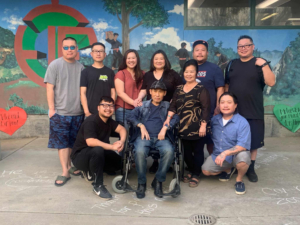 Pahoua’s connection to APC began through a small business she ran printing t-shirts, donating a portion of the proceeds to support farmers. She stayed in touch with the team, continued supporting the work, and eventually joined APC as Farm Partnerships Coordinator, bringing both her language skills and deep ties to the Hmong farming community.
What resonated most with her was APC’s approach: “We’re not taking anything from farmers,” she explained. “We’re here to help them grow.”
That distinction mattered deeply, especially for farmers who had experienced extraction or uncertainty in the past. Building trust takes time, particularly when language barriers and fear of failure are present, she added. Today, Pahoua sees echoes of her grandparents’ and parents’ experiences in the farmers she works alongside.
When farmers tell her she reminds them of her parents—that she carries the same character—it is the highest compliment she can receive.
Moving Forward Together
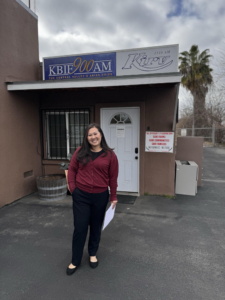
One moment that stood out for Pahoua was being interviewed on a long-running Hmong radio station she grew up hearing throughout her neighborhood. After the interview, farmers called in to share their interest and appreciation. It was a powerful reminder of the importance of representation and trust.
Her message to the community is simple and grounded in everything she learned growing up:
Lead with respect. Help one another. Remember where you come from.
“When we move with care and trust,” she reflected, “everything else has a way of falling into place.”