Building Community Through Food: Central California Food Bank’s Shelbe Van Zwol on Dignity, Access, and Trust
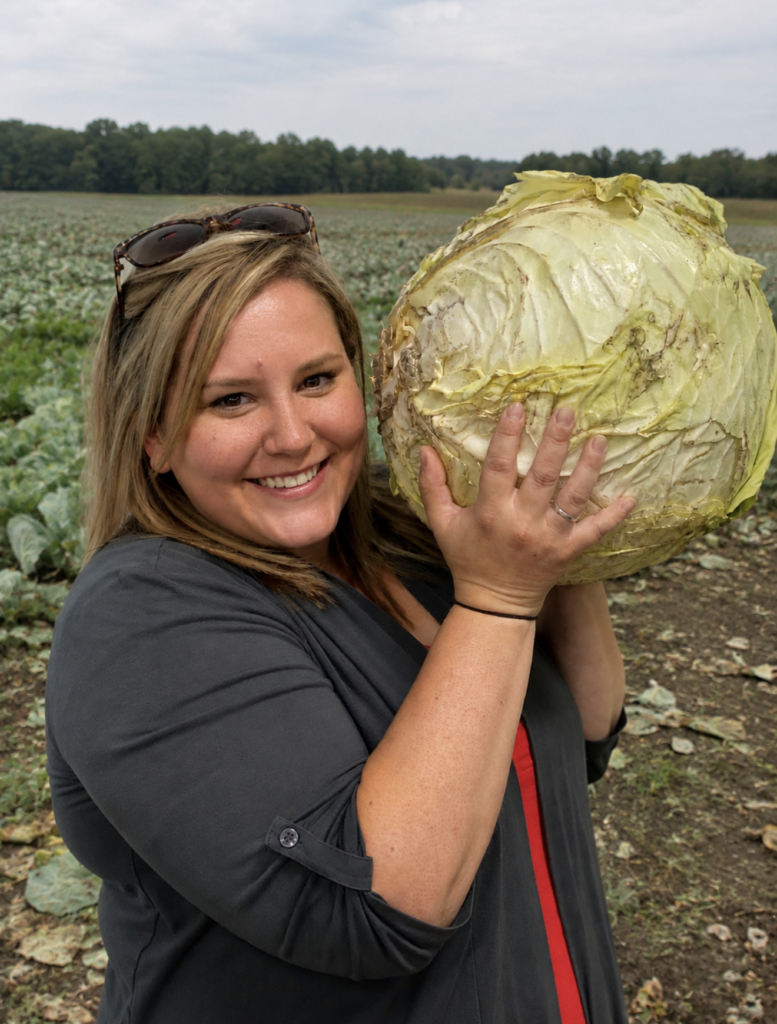
When people think about food systems, they often imagine a straightforward journey: food grows on a farm and then ends up at a grocery store. But between those two points are countless people moving food through communities, coordinating logistics, supporting farmers, and helping ensure food reaches the people who need it most.
That’s where Central California Food Bank (CCFB) comes in—and where people like Shelbe Van Zwol, CCFB’s Food Acquisitions Manager, help hold the system together. Working at the intersection of farmers, food, and communities, Shelbe’s day-to-day involves navigating the often invisible middle of the food supply chain.
From Produce Bins to Food Access
Shelbe’s path into food access took her through parts of the system many never see.
Growing up in Monterey before attending Fresno State, Shelbe initially worked renting plastic produce bins to farmers. At the time, she did not necessarily connect that work to food access.
“I wasn’t out there grabbing food,” she joked. “I was trying to rent the thing to get the food.”
Over time, though, she began to understand just how interconnected those systems were. The bins helped farmers harvest crops. Weather affected outcomes. Transportation and cold storage determined whether food could move successfully through the system. Small changes in one part of the system, she saw firsthand, could create ripple effects everywhere else.
Food, Dignity, and Choice
Shelbe brought that understanding to CCFB, which supports communities through a broad network of initiatives, including more than 300 partner feeding sites, school-based food programs, neighborhood markets, farmworker distributions, and senior hunger initiatives.
She spoke enthusiastically about CCFB’s BackPack Program, which provides food for students and families through schools across Fresno, Madera, and Tulare counties. Shelbe keeps a photo of a young girl carrying one of those food bags home– a bag nearly too heavy for her to carry.
“That picture meant a lot to me,” she said. “I knew she was going to have food for the weekend.”
For Shelbe, hope ultimately comes back to something simple:
“People need people. That’s why we call them neighbors.”
She also highlighted Groceries2Go, which provides scheduled grocery pickup and delivery for individuals and families who may face barriers to accessing food, and First Fruits Market, a free grocery-store-style experience centered on dignity and choice. At the market, people can select foods and culturally relevant produce that fit their households rather than receiving a pre-packed box.
For Shelbe, that approach matters deeply. Food, she explained, is about much more than calories. It carries memory, familiarity, culture, and comfort.
“My main goal in providing culturally appropriate food is to make sure people feel at home with it,” she said. “And not to make them feel any different than anyone else when they’re getting produce from us.”
Building Community Through Food
That same philosophy shapes relationships with farmers and organizations working across the broader food system.
When discussing CCFB’s partnerships across the food system with organizations like APC, Shelbe returned to the same themes: communication, honesty, flexibility, and trust.
“I think every relationship in this specific industry is talking to each other and figuring out how we can serve together,” she explained.
Shelbe also reflected on the growing role women are playing across agriculture and food systems, noting that while the industry has historically been male-dominated, more women are stepping into leadership positions throughout the field.
Central California Food Bank is part of that shift. Much of its leadership is women-led, bringing new ideas and new ways of serving communities. As we continue celebrating the International Year of the Woman Farmer, stories like Shelbe’s remind us that strong food systems are sustained by both infrastructure and a shared commitment to showing up for one another.