APC: 2025 Year in Review
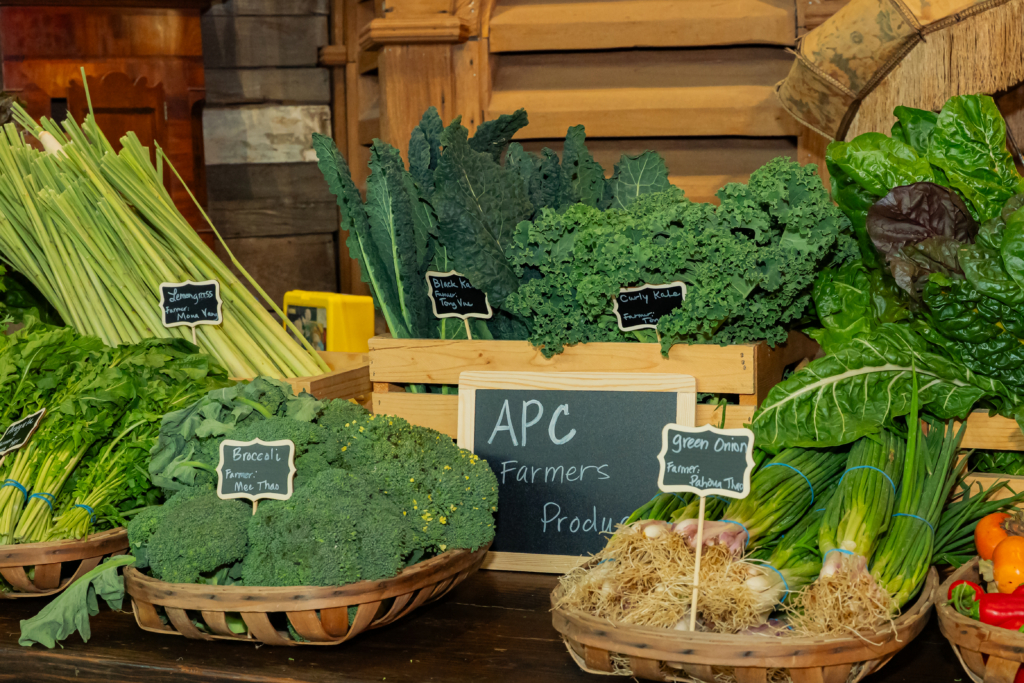
In 2025, the Agricultural Platform Collective (APC) celebrated a powerful year of partnership and progress—working alongside farmers, buyers, and technical assistance providers to advance a meaningful shift for small, underrepresented farmers across California.
In just a year, APC helped farmers secure nearly $2.5 million in sales of well over 2 million pounds of produce, with every dollar going directly to producers. But the significance of that number isn’t scale alone; it’s what it made possible in a system defined by uncertainty, volatility, and risk.
Over the course of the year, APC refined distribution systems that allowed farmers to access consistent sales to the Central California Food Bank, expanded buyer relationships across the state, and supported emergency food efforts during wildfire hunger relief through partnerships with TheFruitGuys and with the Altadena Farmers Market in coordination with World Central Kitchen.
At the same time, APC is grateful to have partnered with groups like Asian Business Institute & Resource Center (ABIRC), F3 Initiative, Kitchen Table Advisors (KTA), and University of California Agriculture and Natural Resources (UC ANR), pairing market access with business training, food safety education, and technical assistance — the kind of support farmers consistently say is hard to find in one place.
Stability in a System That Rarely Offers It
For many farmers, the hardest part of farming isn’t growing food; it’s knowing whether there will be a market for it.
Producer Miguel Reyes of Siembra y Cosecha described how unpredictable pricing and uneven demand shaped his decisions for years.
“Selling what I grow has always been the hardest part. With APC, it’s not just better prices. It’s the trust that what I plant will actually move. That stability gives me confidence, helps me plan ahead, and lets me dream a little bigger. For small farmers, that means everything.”
For Varinder Bedi of Bedi Farms, who farms ten acres in Fresno, that predictability made a tangible difference.
“When I finally found a buyer through this pilot, it made a real difference. I didn’t have to keep my second job. I’m really glad to be part of this and thankful for the support.”
For Macy Xiong, who farms 60 acres in Fresno, consistent APC orders created room to plan rather than react.
“With APC orders this year, I was finally able to start planning improvements to my packing area,” she shared. “It also gives me hope that I can stay on my leased land another season. That kind of stability hasn’t always felt possible.”
Market Access, Paired With Real Support
Farmers were clear that access alone isn’t enough.
In 2025, APC supported growers in completing the FDA’s Food Safety Modernization trainings, coordinated Spanish- and English-language business workshops, and worked alongside partners to address gaps around compliance, operations, and long-term sustainability.
“One of the things I’m most grateful for is our partnership with UC ANR,” said Nanyelis Chapman, who leads APC’s technical assistance coordination. “We really tested what technical assistance can look like…in a way that worked for farmers.”
For Veomany Sysourath, a six-acre farmer in Fresno who has been farming since childhood, APC also created space to grow and sell specialty crops she previously grew only for her family.
“Before APC, I didn’t really have access to a market where I could sell the crops I actually like growing,” Veomany said. “With APC, I’ve been able to sell some of the specialty crops I usually grow just for my family.”
Planting Trust and Building Community
One of the clearest lessons of 2025 was that trust grows through presence. Across dozens of conversations this year, farmers returned to the same themes: invisibility, exhaustion, and loss.
APC’s appearance on Hmong Radio with Michael Yang, led by Farm Partnerships Coordinators Pahoua Lee and Rizpah Bellard, helped reach farming communities that are often overlooked.
“The radio appearance was an important moment for us,” said Pahoua. “It opened the door for farmers to reach out directly, which helped us better understand their needs and build trust moving forward.”
To further cultivate community, APC focused on creating spaces for connection, including forming the Farmer Social Club — a place for farmers to share knowledge, build relationships, and feel less isolated in a profession that often requires carrying everything alone.
“The mixers and events really helped us build trust with farmers,” said Rizpah. “We’re available beyond nine to five, and that matters. Those relationships are why farmers stay locked in with us when buyers are active.”
Buyers Felt the Difference Too
Buyers described working with APC as something rare: a streamlined connection to multiple small farms that never compromise fairness or quality.
During wildfire relief efforts, partnerships with Altadena Farmers Market and World Central Kitchen demonstrated what a regional food system rooted in reciprocity can look like — one where culturally familiar produce reached communities navigating displacement and recovery.
“Buying from local farms isn’t charity,” one partner shared. “It’s infrastructure. When you pay a fair price, you’re not just feeding people for a day — you’re investing in their future.”
Looking Ahead
In reflecting back, APC found that the most powerful impact wasn’t just sales, but building community. Farmers told us they feel less alone, less expendable, and more connected to a system beginning to work with and for them instead of around them.
In 2025, we saw that belief come alive: in fields and markets, in relief kitchens, and in the quiet moments where farmers plan their next season with a little more certainty and a little more hope.
As APC looks ahead to 2026, the focus remains on deepening this foundation: expanding buyer networks, strengthening the ecosystem of support for farmers, investing in and deepening farmer-to-farmer connections, and ensuring producers remain at the center of every decision.
“What we’re building is trust — with farmers, with partners, and with buyers,” said Chief Agricultural Business Officer José Corona. “That trust is what allows this work to grow in a way that’s real and lasting.”